By VastuLand Real Estate Experts
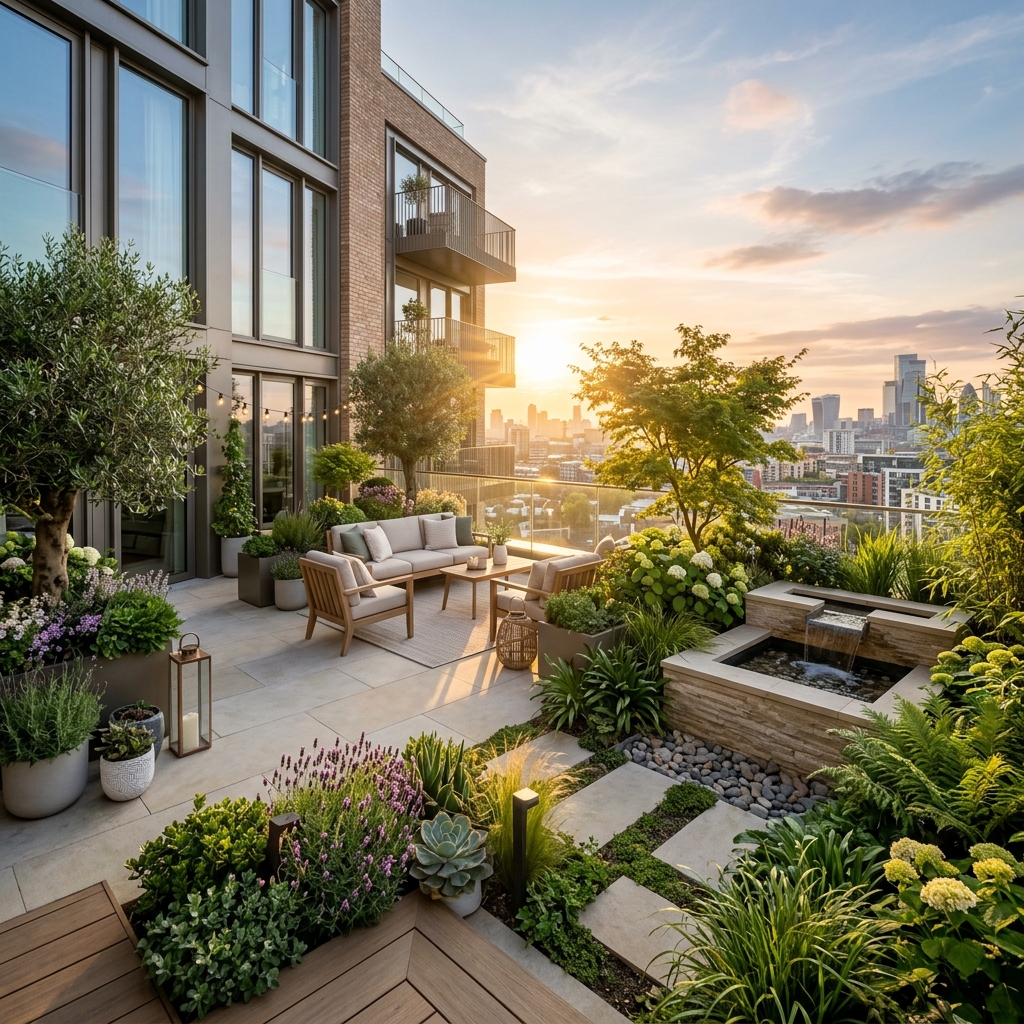
When we discuss Vastu Shastra, the focus is almost entirely on the interior layout—the entrance, the kitchen, and the bedroom. However, the exterior spaces of your home, specifically your gardens, terraces, and balconies, act as the primary filters for the cosmic energy (Prana) entering your living space. Proper Vastu landscaping can amplify wealth, while incorrect placement of heavy trees or water features can create severe financial blockages.
1. The Sacred North-East: The Zone of Water and Light
In Vastu, the North-East (Ishan) corner is the most sacred zone of the property, ruled by the element of Water and the deity Shiva. This area must be kept as light, clean, and open as possible.
- Water Features: If you plan to install a swimming pool, an underground water tank, a decorative fountain, or a birdbath, it must be placed in the North or North-East zone of your garden. The flowing water in this direction constantly generates new financial opportunities.
- Plants: Only small, lightweight, and fragrant plants like Tulsi (Holy Basil), mint, and small flowering shrubs should be placed here. Never plant large, heavy trees in the North-East, as their deep roots and heavy trunks will block the morning sunlight and the flow of prosperity.
2. The Heavy South-West: The Zone of Earth and Stability
The South-West (Nairutya) corner is ruled by the Earth element and dictates the stability of the household, the retention of wealth, and the strength of relationships. This zone requires "weight."
- Large Trees: If you are planting massive shade trees, fruit-bearing trees (like mango or jackfruit), or tall bamboo screens, they must strictly be placed in the South or South-West zones. These large trees provide a protective barrier against the harsh afternoon sun and stabilize the energy of the plot.
- Rock Gardens: Heavy rockeries, stone statues, or elevated gazebos are perfectly suited for the South-West corner, physically grounding the property's energy.
3. The South-East (Agni): Managing Fire in the Garden
The South-East is the zone of Fire (Agni). When landscaping, this energy must be respected to prevent legal troubles or aggressive arguments within the family.
Barbeques and Fire Pits: If you are building an outdoor kitchen, a barbeque grill, or a decorative fire pit for winter evenings, the South-East corner is the only correct placement. Ensure that no major water features are placed adjacent to this fire zone to avoid elemental conflict.
4. Balcony Vastu for High-Rise Apartments
For millions living in high-rise apartments in Gurgaon and Noida, the balcony serves as the only "garden." The same macro-principles apply on a micro-scale.
- North/East Balconies: These are highly auspicious. Keep them clutter-free. Use lightweight hanging planters and avoid creating heavy storage cabinets here. A small, tabletop water fountain is ideal.
- South/West Balconies: These balconies should ideally be enclosed with glass or heavy blinds to block the negative afternoon infrared heat. Use heavy, large terracotta pots with thick-leaved plants to create a protective barrier.
Conclusion: Cultivating Positive Prana
Vastu landscaping is not about superstition; it is an ancient architectural science deeply rooted in solar dynamics, wind patterns, and magnetic fields. By simply rearranging the weight distribution (heavy trees in the South-West, light water in the North-East) of your garden or balcony, you create a harmonious micro-climate that naturally supports physical health and mental clarity, which in turn leads to financial prosperity.
Frequently Asked Questions:
Q: Are thorny plants like cactus allowed in Vastu?
A: No. Vastu strictly prohibits thorny plants (except roses) and bonsai trees inside or immediately around the home. Thorny plants create aggressive, piercing energy, while bonsais represent stunted growth and stagnation.
Q: Where should the garden swing (jhoola) be placed?
A: A swing should ideally be placed in the North or East zones, and the person sitting on it should face East or North while swinging.